Picazor: organize boards
Turn a growing collection into focused visual directions that are easy to understand.
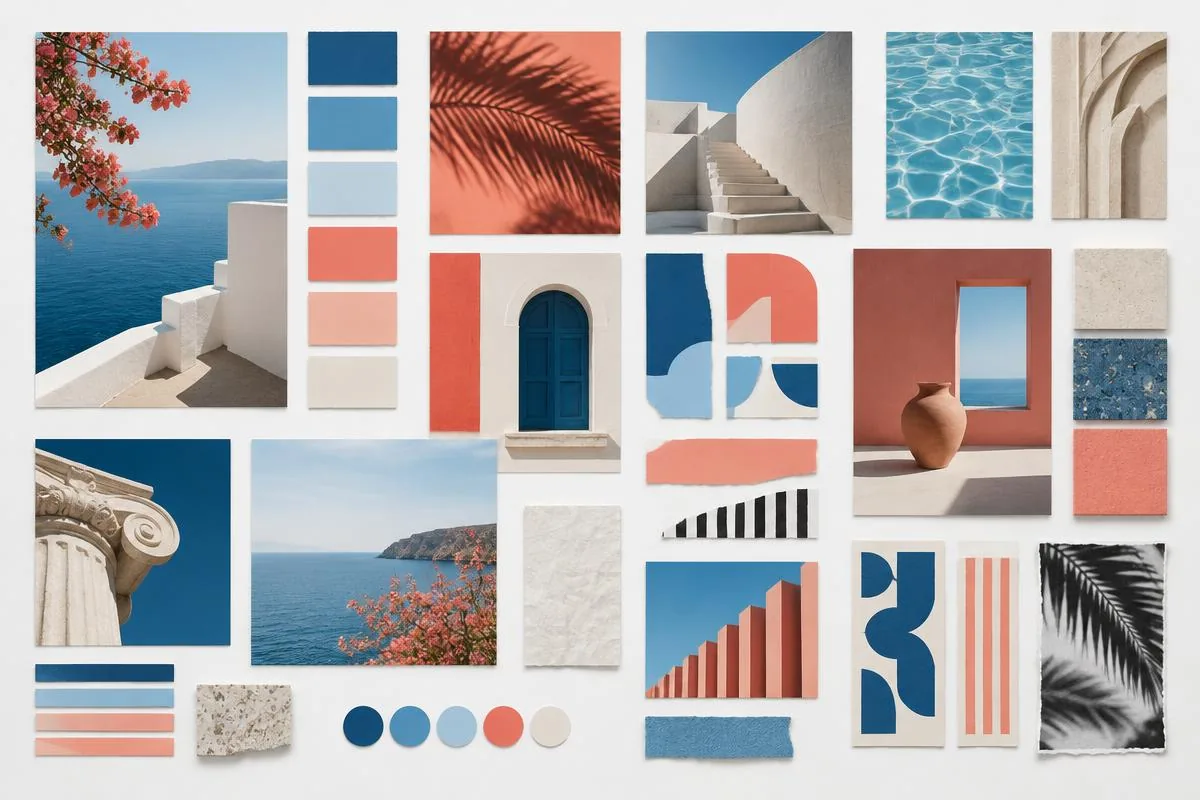
Give each idea a clear home
Boards are most useful when they answer one question. A board might explore a color story, a campaign feeling, an interior direction, or the visual language of a new project. Separate competing directions rather than forcing everything into a single canvas.
Use short labels to explain why an image belongs. A few words can distinguish “warm natural light” from “quiet composition” and keep a team from reading the same reference in different ways.
Find the pattern, not just the pictures
Arrange references so similarities and contrasts become visible. Notice repeated shapes, colors, textures, and levels of energy. The point is not to make every item match; it is to make the underlying idea easier to see.
As a direction develops, edit without hesitation. Remove visual noise and keep the strongest examples. A board that makes its point quickly is more helpful than one that tries to show every possibility.
Keep exploring the Picazor process, find more ideas in the journal, or return to all three features.
Bring your next idea into focus.
Explore the Picazor approach and see how a little structure can give visual inspiration a clearer direction.